

HOLLYWOOD, Fla. (CN) - The U.S. Fish and Wildlife Service proposed Wednesday adding conservation protections for Florida's infamous ghost orchid.
"The ghost orchid is Florida's most famous flower, and it deserves a chance to live. Thanks to today's decision from the U.S. Fish and Wildlife Service, it will get that chance," Sun Coast regional director for the National Parks Conservation Association Melissa Abdo said in a press release.
The Institute for Regional Conservation, the Center for Biological Diversity, and the National Parks Conservation Association teamed up in 2022 to petition the government to add the plant to the list of flora protected under the Endangered Species Act.
The proposal comes after the conservation groups hired the Jacobs Public Interest Law Clinic for Democracy and the Environment at Stetson University College of Law to sue the government agency for failing to meet the requisite deadlines. The groups and the agency entered into a settlement agreement whereby the agency promised to review the petition and make a recommendation by June 1.
"It's an underfunded organization that faces a very tall task," Professor of Law and Director of the clinic Jaclyn Lopez said.
The agency's 49-page report proposes qualifying the orchid as endangered, as its population has faced decline due to poaching, hurricanes, and habitat degradation resulting from these factors.
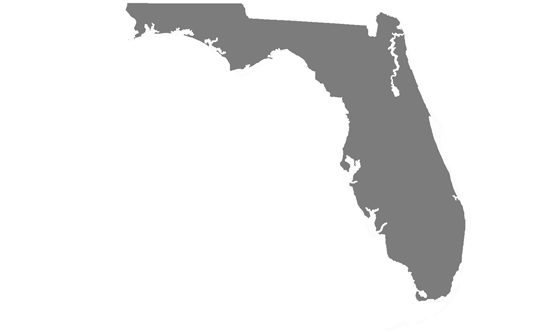
The white, flowering plant is endemic to southwestern Florida and western Cuba. Scientists estimate its population has declined by more than 90% globally and by up to 50% in Florida. Only an estimated 1,500 ghost orchid plants remain in an area of slightly over 1,450 square miles, and less than half are known to be mature enough to reproduce.
"It's really just got this captivating presence," Florida and Caribbean Director and senior attorney for the Center for Biological Diversity, Elise Bennett, said. "It just stands out as such an interesting plant because it's almost like a pop culture icon as a species here in Florida, up there with the Florida panther or the gopher tortoise or the manatees."
In the wild, ghost orchids can take 15 years or more to bloom for the first time, which makes them especially vulnerable to poaching, a practice that, Bennett noted, isn't always driven by malicious intent.
"Unfortunately, the rarity, the uniqueness, the beauty is also something that puts it at risk," Bennett said. "There's that risk of loving the species to death by taking it out of its natural habitat and not allowing them to proliferate in the wild."
Bennett said botanists from around the globe travel to the Greater Everglades ecosystem to catch a glimpse of the leafless plant species. The plant's rarity leaves it vulnerable to poachers. The plant is challenging to cultivate in controlled environments, prompting collectors to seek out wild specimens.
The agency declined to propose critical habitat for the orchid, citing concerns that revealing its location could encourage poaching. Bennett said she understands the reasoning but still hopes habitat protections will follow.
"This is great news in troubled times and demonstrates that some environmental safeguards are still operating in the United States," George Gann, executive Director at The Institute for Regional Conservation, said in a press release. "However, the decision not to protect critical habitat for the ghost orchid, while complicated by concerns of increasing poaching pressure, may reduce protections in areas under threat from oil drilling, off-road vehicles and other pressures."
Canalization, ditching, and groundwater extraction in an area of Florida that has undergone canalization over the last century to divert water away from residential areas and roads have led to hydrological changes and habitat modifications.
Ghost orchids rely on the fig sphinx moth and pawpaw sphinx moth, which are attracted to the plant's sweet, fruity fragrance, as pollinators.
Ghost orchids use their roots to photosynthesize and attach themselves to a host tree. In Florida, ghost orchids are found in wet freshwater environments, including swamps and sloughs. The damp environments protect against frost and provide the necessary conditions for seedling recruitment. Standing water conditions year-round also keep wildfires from burning into the interior of these swamps and sloughs, which could kill host trees.
Hurricanes and other natural disasters could spell the end of the species, according to the agency.
"Because the ghost orchid has low redundancy and representation is limited, the species is vulnerable to a single catastrophic event like a hurricane that could impact the entire range," the agency said in its proposal. "Thus, after assessing the best scientific and commercial data available, we determine that the ghost orchid is in danger of extinction throughout all of its range."
Lopez said the agency has faced staffing shortages even under conservation-friendly presidents, let alone under Donald Trump, whose administration pushed mass firings and rolled back environmental protections.
"Even as the administration works to expel hard-working, dedicated environmental professionals from the government, those same professionals are fighting to protect endangered species like the ghost orchid for future generations," Abdo said. "That kind of courage and dedication is what we need to slow the extinction crisis and save species from being lost forever."
Florida protects the plant on a state level, but Bennett said the federal recognition comes with recovery planning, enhanced law enforcement protection and a prohibition on digging up or destroying the plants on public land.
"We've got a lot of amazing biodiversity in the southeast," Lopez said. "We also have a lot of development threats and impacts from hurricanes and all kinds of other things that relate to these species."
The agency is seeking public comment for the next sixty days, particularly from botanists who can add to the scientific data concerning the plant and its threats.
Source: Courthouse News Service